In the world of high-growth e-commerce, we often talk about Customer Acquisition Cost (CAC), Return on Ad Spend (ROAS), and Lifetime Value (LTV). But there is a silent killer lurking in your balance sheet that many founders ignore: Latency.
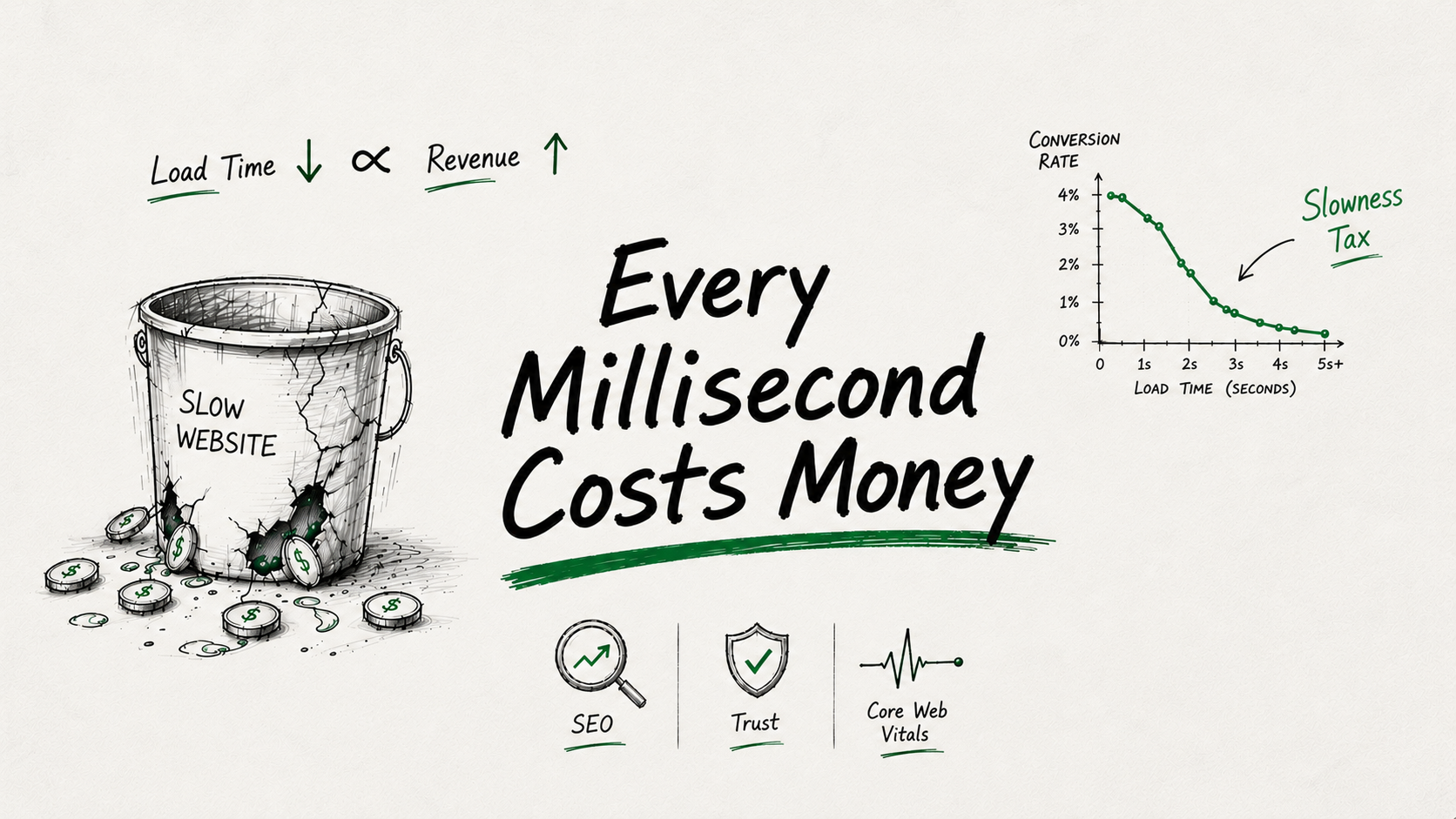
Google’s research has long established that a 100ms delay in load time can drop conversion rates by 7%. In a marketplace environment where ad costs are at an all-time high, this isn't just a technical detail—it’s a financial leak. If your site takes 3 seconds to load while your competitor’s takes 1, you are effectively paying a 20% "Slowness Tax" on every dollar you spend on marketing.
1. The Economics of the "Wait"
Most marketplace owners view site speed as an engineering project. They shouldn't. They should view it as an arbitrage opportunity. If you can lower your load time from 2 seconds to 500ms, you are essentially increasing the effectiveness of your entire marketing budget without spending an extra dime on ads.
In 2026, where social media feeds move at the speed of light, customers have zero patience for the "spinning wheel." A slow-loading product page doesn't just lose a sale; it loses trust. Customers equate technical speed with operational excellence. If your site is slow, they assume your shipping is slow, too.
2. Why Legacy Platforms are "Speed-Trapped"
The biggest hurdle to hitting the 100ms rule is the Monolithic Architecture found in older platforms like Shopify or WooCommerce. These systems were built for a different era of the web.
- Liquid/PHP Rendering: Processing templates on the server before sending them to the user creates a mandatory "wait time."
- The Plugin Paradox: Every app you add to a legacy platform adds 3-5 scripts to your frontend. By the time your site is functional, it’s carrying 2MB of technical debt.
- Centralized Infrastructure: If your server is in Virginia and your customer is in Mumbai, speed is physically limited by distance.
3. The Litekart Strategy: Performance by Design
We built Litekart with a single goal: to make the 100ms rule the default, not the exception. By choosing a Headless Architecture powered by Svelte 5 and HonoJS, we’ve eliminated the bottlenecks that plague traditional stores.
Our Technical Moat:
- Edge-Native Rendering: Litekart storefronts are rendered at the edge, meaning the "server" is always physically close to the customer, whether they are in New York or New Delhi.
- Svelte 5 Reactivity: By using Runes instead of a Virtual DOM, Litekart’s frontend is nearly weightless. There is no background "diffing" slowing down user interactions.
- Zero-Bloat Core: Features like Page Builders and SEO management are built directly into our core engine, eliminating the need for 20+ external plugins.
4. Speed is Your Best SEO Strategy
Search engines in 2026 have moved beyond keyword stuffing. They prioritize User Experience (Core Web Vitals). A site that loads in 500ms will consistently outrank a site that loads in 2 seconds, even if the content is identical.
By migrating to Litekart, brands often see an immediate 15-20% boost in organic traffic simply because search engines reward the lack of friction. You aren't just pleasing your customers; you are pleasing the algorithms that control your visibility.
Conclusion: Invest in Milliseconds
The "100ms Rule" is a reminder that in e-commerce, time truly is money. Stop treating your site speed as a background task for your developers. Treat it as the high-leverage financial lever that it is.
Ready to reclaim your "Slowness Tax"? Switch to a platform built for the speed of 2026. Switch to Litekart.